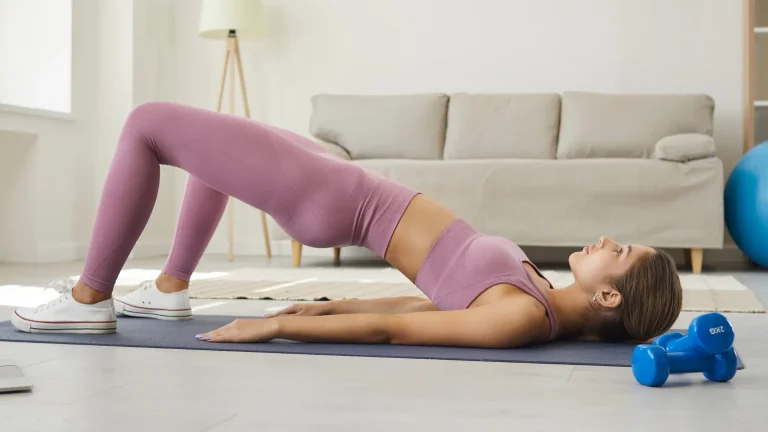
Want a Flatter stomach? Start With This Breathing Trick
If you’ve been dealing with a stubborn lower belly pooch or nagging back pain, it might be time to focus on one simple but powerful fix: a breathing trick that supports deep core and pelvic floor strength. The way you breathe plays a major role in how your core functions—and if you’re breathing shallowly or inefficiently, it can throw off pressure in your body, making core and pelvic floor issues harder to manage.
Let’s walk through how to breathe the right way so you can build strength from the inside out
Are You Breathing Correctly? (A Quick Test)
Step 1: Shallow vs. Deep Breathing Test
- Take a shallow breath in and then cough.
- Notice where the pressure is in your body.
- If you feel all the pressure pushing down into your pelvic floor, you may be breathing inefficiently.
- Now, take a deep breath in and cough.
- Do you feel more core activation? Does it feel different?
- Shallow breathing, especially with coughing or straining, can put extra pressure on your pelvic floor and contribute to issues like organ prolapse or diastasis recti.
A good breathing pattern should feel like a 360-degree expansion in your ribs, not just belly breathing.
The Problem with Belly Breathing
Why Belly Breathing Alone is Not Enough
- Expanding only the front of your belly can weaken the core and increase tension in the pelvic floor.
- Too much belly movement can lead to poor rib and back expansion, which limits proper breathing mechanics.
- If your breath pushes downward into your pelvic floor, it may increase prolapse risk over time.
Instead, we want to focus on 360-degree breathing—where your ribs, back, and belly all expand evenly.
360-Degree Breathing: The Right Way to Breathe
Step 1: Understanding Rib Expansion
Imagine your ribs moving like an umbrella opening up—expanding in all directions instead of just pushing the belly out.
When You Inhale
- Your ribs should expand out to the sides, back, and slightly upward.
- Your diaphragm should lower to create space in the lungs.
- Your belly will move slightly, but not excessively.
When You Exhale
- Your ribs should gently close back in, engaging your deep core muscles.
- Your pelvic floor should naturally lift and contract along with your exhale.
A Simple Visual:
- Shallow breathing = a broken umbrella (expanding in only one direction)
- 360-degree breathing = a full, strong umbrella (expanding in all directions)
How to Practice 360-Degree Breathing
Step-by-Step Guide
Try this simple breathing drill to start retraining your core:
- Lie on your back with your knees bent.
- Place your hands on the sides of your ribs.
- Inhale deeply through your nose, feeling your ribs expand outward to the sides and back.
- Exhale slowly through your mouth, feeling your ribs gently return inward.
- Repeat for 5-10 breaths, focusing on slow, controlled expansion and contraction.
Tip
If you struggle to feel your ribs expanding, try wrapping a light resistance band around your ribs as a feedback tool.
Common Mistakes to Avoid
- Holding your breath while exercising – This can increase pressure on the pelvic floor.
- Only breathing into your belly – Focus on ribcage expansion, not just the stomach.
- Shrugging your shoulders when you inhale – This means you’re using your neck muscles instead of your diaphragm.
The Link Between Breathing & Core Strength
Proper breathing doesn’t just support the pelvic floor—it also helps with:
- Reducing back pain by improving spinal alignment
- Flattening the lower belly by engaging deep core muscles more effectively
- Improving posture by reducing tension in the ribs and diaphragm
- Enhancing core workouts by preventing breath-holding and pressure buildup
Ready to Strengthen Your Deep Core & Pelvic Floor?
Breathing is just one piece of the puzzle. If you want a step-by-step plan to build true core strength without guesswork, grab my Deep Core & Pelvic Floor Workout Guide.