Why Crunches Fail + What to Do Instead for Real Deep Core Strength
If you’ve been doing crunches hoping to flatten your stomach and strengthen your deep core—but still struggle with a weak core, tight hips, or even urine leaking when you jump or sneeze—you’re not alone.
Crunches aren’t the answer. In fact, they might be doing more harm than good.
Let’s break down what your core actually is, why crunches fall short, and what you can do instead to activate the deep core muscles that actually matter.
What Are My Deep Core Muscles?
When people think of “core,” they usually picture the six-pack (a.k.a. rectus abdominis). But the deep core is a whole system of muscles working together to support your spine, organs, and pelvic floor.
Your deep core includes:
- Transverse abdominis (your built-in corset)
- Pelvic floor muscles
- Multifidus (deep back stabilizers)
- Diaphragm (yep, your breathing muscle)
These muscles wrap around your spine like a cylinder, and when they’re strong and working together, they stabilize your body, reduce injury, and help you feel light, strong, and supported from within.
Why Crunches Don’t Work
Crunches mostly target the surface-level abs and often:
- Increase intra-abdominal pressure (hello, bloating and pelvic pressure)
- Overload the neck and hip flexors
- Leave out the pelvic floor entirely
- Can make issues like diastasis recti or leaking worse
You don’t need 100 crunches a day. You need smarter, more functional movement.
The Problem with Crunches
Crunches target the rectus abdominis—the most superficial abdominal muscle. While this muscle is important, relying solely on crunches to strengthen your core has several limitations:
1. Crunches Ignore the Deep Core Muscles
Crunches don’t engage the transverse abdominis, pelvic floor, or diaphragm effectively. These muscles are crucial for stabilizing your spine and pelvis during movement, which means crunches won’t help you build deep core strength.
2. Crunches Can Contribute to Muscle Imbalances
Overworking the rectus abdominis without addressing the other layers of your core can lead to muscle imbalances. This can manifest as poor posture, lower back pain, or difficulty performing other exercises safely.
3. Limited Range of Motion
Crunches involve a repetitive forward flexion motion. This not only neglects the lateral and rotational movements of the core but can also place strain on the neck and lower back, especially if performed incorrectly.
4. No Real-Life Application
In daily life, we rarely (if ever) use our core in the way crunches train it. Instead, the core is designed to stabilize the spine during movements like bending, twisting, lifting, and balancing. Crunches don’t translate well to these functional tasks.
5 Signs Your Deep Core Isn’t Firing Properly
- You feel weak in your low belly, even if you’re “fit”
- You get lower back pain during ab workouts
- Your hips feel tight constantly
- You experience urine leaking when jumping, coughing, or laughing
- You see coning or doming in your belly during exercise
If any of those sound familiar, it’s time to rethink your core training.
What To Do Instead: Deep Core Activation Exercises
Here are 5 beginner-friendly, low-impact exercises that target the deep core (no crunches required):
1. Diaphragmatic Breathing
This foundational exercise trains your diaphragm and transverse abdominis while promoting relaxation and core engagement.

How to Do It:
- Lie on your back with your knees bent and feet flat on the floor.
- Place one hand on the side of your ribcage and the other on your lower abs.
- Inhale deeply, expanding your ribs to the sides without letting your chest rise.
- Exhale slowly, drawing your belly button toward your spine.
- Repeat for 5-10 breaths.
2. Pelvic Tilts
This gentle exercise activates the pelvic floor and TVA while improving spinal mobility.
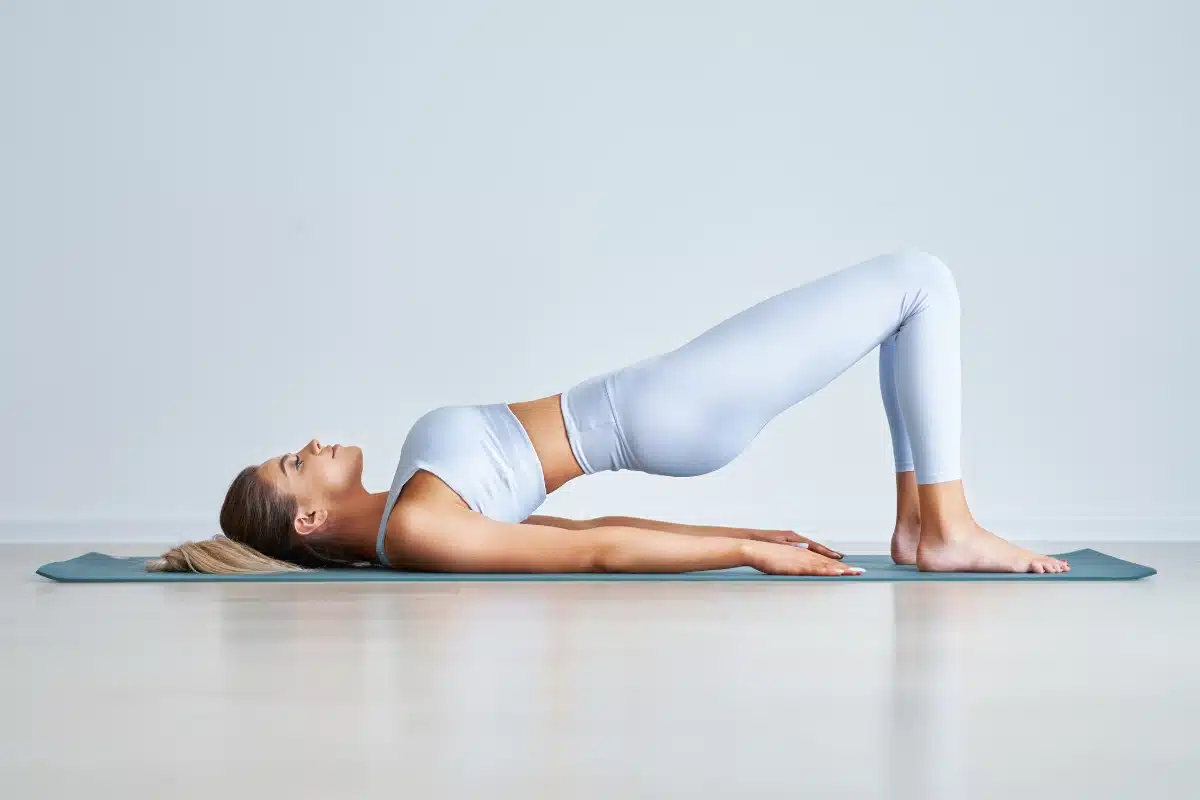
How to Do It:
- Lie on your back with your knees bent and feet flat.
- Exhale as you tilt your pelvis back, pressing your lower back into the mat.
- Inhale as you return to neutral.
- Repeat for 10-15 reps.
3. Dead Bug
This classic core exercise trains stability by engaging the TVA and multifidus.

How to Do It:
- Lie on your back with your knees bent at 90 degrees and arms reaching toward the ceiling.
- Exhale as you extend your right arm and left leg, keeping your back flat.
- Inhale as you return to the starting position.
- Alternate sides for 10-12 reps.
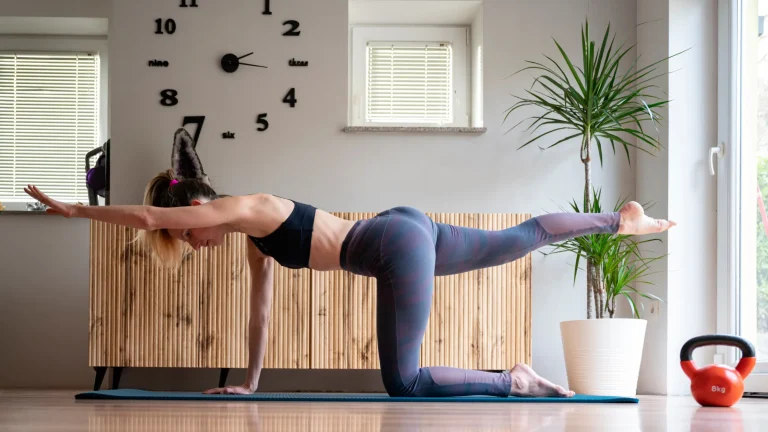
4. Bird Dog
This move targets the deep core and challenges balance and coordination.

How to Do It:
- Start on all fours with your wrists under your shoulders and knees under your hips.
- Exhale as you extend your right arm and left leg, keeping your hips square.
- Inhale as you return to the starting position.
- Alternate sides for 10-12 reps.
5. Elevated Plank
A properly executed plank is a powerhouse for deep core activation and is one of the best exercises for building a strong core.

How to Do It:
- Start in a forearm plank position, with your shoulders stacked over your elbows.
- Exhale as you draw your belly button toward your spine, engaging your TVA.
- Hold for 20-60 seconds, focusing on form.
Ready to Strengthen Your Core the Right Way?
Your deep core isn’t about vanity — it’s about feeling grounded, supported, and pain-free in your everyday life.
Whether you’re dealing with leaking, lower back pain, poor posture, or that nagging belly bloat that won’t go away… it’s time to go deeper than crunches.
✨ I created the Deep Core + Pelvic Floor Program to help women like you reconnect to your core in a safe, gentle, and effective way.
➡️ Inside, you’ll get:
- Step-by-step video workouts (short + beginner-friendly)
- Breathwork and mobility to release tension in your hips, back, and pelvis
- Real strategies to flatten your stomach without wrecking your spine
You don’t need to suffer through another painful ab workout that doesn’t work.
🌀 Let’s get you strong from the inside out — with movement that supports your life, not just your body.
👉 Click here to learn more about the program and start today.
FAQ: Deep Core Strength + Crunches
1. Can I still do crunches if I have a weak core?
Crunches can be added later, but first you need to retrain your deep core muscles with breathwork and activation-based exercises.
2. How long does it take to strengthen my deep core?
Most people feel stronger and more supported in just a few weeks of consistent deep core training.
3. Are these exercise for postpartum women only?
No! Deep core training is essential for any woman dealing with back pain, poor posture, tight hips, or weak abs.
Further Reading: Trusted Resources on Core + Pelvic Floor Health
- Curious why traditional core exercises like crunches don’t actually strengthen your deep core?
Check out this expert guide from Cleveland Clinic that explains the difference between surface-level and functional core work.
2. If you’re experiencing urine leaking when jumping, coughing, or sneezing.
You’re not alone — and it might be a sign of pelvic floor dysfunction. This article from Mayo Clinic breaks down the common causes of urinary incontinence in women.
3. Want to understand what the pelvic floor actually is and how it supports your core?
This breakdown from the Herman & Wallace Institute explains its role in stability, breath, and bladder control.