Pilates Schedule: Discover Your Perfect Workout
Are you finding it hard to stick with your Pilates routine? A simple, personalized Pilates schedule is often the clearest way to make Pilates a consistent part of your week and actually reach your goals.
Search trends show many people are looking for Pilates schedule templates and step-by-step plans — they want a practical roadmap that fits real life, whether you train on the mat or the reformer.
The Power of a Consistent Pilates Practice
Starting a regular Pilates routine can genuinely change how your body moves and how you feel. Over 14+ years as a certified Pilates instructor, I’ve seen clients gain strength, mobility, and calmer focus simply by making Pilates a weekly habit.
Why Consistency Matters in Pilates
Consistency is the secret to progress: repeated, focused practice builds motor control, improves alignment, and lowers injury risk. Rather than chasing long sessions, prioritize regular short-to-moderate sessions—this is the most reliable way to improve movement patterns and durability.
Many studies and coaching experience support that Pilates improves flexibility, core strength, and overall well‑being; in my teaching I typically see measurable posture and control gains around 8–12 weeks when clients follow a structured plan.
(captions available).
The Transformative Results of Regular Pilates
With a consistent Pilates routine you’ll notice real, practical changes that affect daily life, not just the studio:
- Improved flexibility and range of motion that helps with everyday tasks
- Increased strength and muscle tone, especially through the core and posterior chain
- Better posture and alignment that reduces neck and back strain
- Enhanced mental clarity and focus from mindful movement
- Reduced stress and anxiety through breath‑led practice
Whether you train on the mat or the reformer, the right progression of exercises and consistent training will sculpt sustainable improvements.
Short case: a 38‑year‑old desk worker I coached added two 30‑minute sessions/week and reported reduced low‑back pain and easier upright posture within 10 weeks.
Understanding Your Pilates Schedule Needs
To build an effective Pilates schedule, start by honestly assessing your current fitness, goals, and weekly time availability. That clarity lets you choose the right class types, equipment, and frequency so your practice fits your life and produces results.
Assessing Your Current Fitness Level
Begin by asking whether you’re an absolute beginner, returning after time off, or already practicing regularly on the mat or reformer. Note any pain, injuries, or medical restrictions — these change how we program movements and progressions.
To check your fitness level, ask yourself:
- How many minutes and sessions per week am I currently active?
- Do I have movement restrictions (e.g., low‑back pain, shoulder issues)?
- Have I trained with a certified instructor before or taken group classes?
Setting Realistic Pilates Goals
Set clear, measurable goals tied to timelines you can commit to. Instead of vague goals like “get stronger,” choose outcomes such as “improve plank hold by 30 seconds” or “increase hamstring flexibility to touch toes.” Expect meaningful change in 6–12 weeks with consistent sessions.
When setting your Pilates goals, consider:
- What outcome matters most (mobility, core strength, posture)?
- How many sessions per week can you reliably do?
- Do you prefer studio classes, private lessons, or at‑home practice?
| Goal TypeExample GoalTimeline | ||
| Flexibility | Practice Pilates 3 times/week (mat or reformer) to improve hamstring mobility | 6–12 weeks |
| Strength | Two structured Pilates sessions + one strength session to build core and glute strength | 8–12 weeks |
| Stress Relief | Short mat flow 1–2 times/week focused on breath and mobility | 4–8 weeks |
Finding Your Ideal Workout Frequency
Your ideal frequency balances goals, recovery, and real life. A practical progression many clients follow is:
- Beginner/Intro: 2 sessions/week (30–45 minutes) to learn foundations and form
- Intermediate: 3–4 sessions/week mixing mat, reformer, and quick home flows
- Advanced: 4–6 sessions/week with targeted strength, reformer work, and mobility sessions
When deciding frequency, consider:
- How much time per session you realistically have (better to do 20 focused minutes than an unfocused hour)
- Studio vs at‑home access: reformer work requires studio or home equipment; mat work is highly flexible
- Whether you’re combining Pilates with other workout classes or strength training — schedule harder sessions on different days when possible

Be ready to adapt: if pain or fatigue appears, pause and consult a qualified instructor. Next: a practical “Pilates Schedule For Beginners” 4‑week starter plan (mat and reformer options) to put these principles into action.
Creating Your Perfect Pilates Schedule
Now that you’ve assessed your needs, it’s time to build a practical Pilates schedule that fits your life and helps you reach measurable goals. A good schedule is a roadmap—one that balances progressions, recovery, and the equipment or class formats you have access to.
“Consistency is key, and a consistent Pilates practice can transform not just your body, but your entire approach to health and wellness.” — Jess
Pilates Schedule Workout Plans
Below are three instructor-tested sample plans you can adapt. Use the one that fits your goals and access to equipment (mat vs reformer vs studio classes).
- Beginner 4‑week plan (mat-focused): Weeks 1–2: 2 x 30‑minute mat sessions/week (foundations + breathing). Weeks 3–4: 3 x 30–45 minutes (add core and mobility flows).
- Strength hybrid plan: 2 Pilates sessions/week (focus on posterior chain + alignment) + 2 strength sessions/week (weights) — schedule heavy lifting and high-load strength on alternate days to recover.
- Weekly recovery plan: 2 focused Pilates classes (30–45 minutes), 1 gentle cardio or walk, and 1 dedicated mobility session — ideal for active recovery weeks.
Pilates Schedule template
Use a simple template to plan each week.
Pilates Schedule For Beginners
If you’re new, start here:
- Weeks 1–2: 2 short sessions/week (30 minutes) focused on form and breathing;
- Weeks 3–4: increase to 3 sessions/week adding 1 targeted strength or mobility segment.
Short, consistent sessions beat infrequent long ones — that’s the way to build sustainable habits.
Customizing Your Schedule for Maximum Results
Tailor session length and equipment to your life: choose mat-only if you have limited access, or add reformer/studio classes when you can for extra resistance and cueing.
I recommend tracking 2–3 progress metrics (e.g., plank hold, single‑leg balance, overhead reach) and reviewing them every 4–6 weeks.
Creating an Aesthetic Pilates Schedule That Motivates You
Make your schedule easy to follow and visually appealing: printable calendars, Google Sheets, or a simple app work well. Skip the fluffy language — aim for clarity (day, time, session focus, equipment). If you like Pinterest inspiration, use it for layout ideas but keep the plan functional.
If you’re new, I recommend starting here — grab the template I give to new clients: a compact 4‑week plan plus a weekly class/session layout to help you sculpt consistent progress.
Pilates Schedule for Different Lifestyle Needs
Pilates should fit your life—not the other way around. Whether you’re a busy professional, a parent juggling schedules, or someone who prefers studio classes, you can build a sustainable routine that improves strength, mobility, and posture.

Pilates Schedule for Busy Professionals
Short, focused sessions win. I tell my clients: prioritize quality over quantity — 20 focused minutes beat 60 distracted. Try 3 x 20–25 minute sessions per week (morning core flows, lunch mobility, evening gentle stretch) to maintain consistency.
- Sample micro-case: 3 × 20‑minute sessions/week — quick mat flows emphasizing breathing, alignment, and targeted mobility.
Pilates Schedule for Parents and Caregivers
Split sessions work well when your time is fragmented. Four 25–30 minute sessions (two mornings, two evenings or two short mat flows + two mobility breaks) let you fit practice around family life without losing progress.
- Sample micro-case: 4 × 25‑minute sessions/week — mix of mat-based mobility and short strength sets you can do between tasks.
Morning vs. Evening Pilates: Finding Your Optimal Time
Choose the time that matches your energy and goals. Morning sessions boost energy and posture for the day; evening sessions help unwind and restore mobility. Both are valid — pick the one you’ll stick to.
| Time of day | |
| Morning | When you need relaxation and improved sleep |
| Evening | To release daytime tension + Stress |
Pilates Weekly Schedule (Quick Examples)
Below are three simple weekly templates you can adapt to your access and goals.
- Office worker (limited time): Mon 20‑min mat (core + posture), Wed 20‑min mobility, Fri 25‑min mat strength.
- Parent (split sessions): Tue/Thu 25‑min mat morning + Sat 30‑min longer flow; add a 15‑min mobility session midweek.
- Studio user / group class attendee: 2 studio classes (reformer or mat) + 1 home maintenance flow — schedule classes on non‑consecutive days.
Pilates Schedule at Home: Making It Work in Your Space
Designate a small clear area, keep a quality mat and a resistance band or small props handy. If you don’t have reformer access, a band and focused cueing will substitute effectively for many strength movements.
- Dedicate a space: even a corner with a mat helps your brain link environment to practice.
- Keep minimal equipment: mat, resistance band, small ball or block — enough for most sessions.
- Schedule it in: block it on your calendar as you would a class or meeting.
If you have studio access, alternate one guided weekly class with self‑led home sessions to combine expert cueing with at‑home consolidation. When in doubt, consult a certified instructor to scale movements safely — especially after injury or pregnancy.
Combining Pilates With Other Fitness Activities
When planned smartly, Pilates complements strength training, cardio, and running — improving movement quality, reducing injury risk, and helping you train more effectively. Below are practical, coach‑tested ways to combine modalities without overloading your body.
pilates and strength training schedule
Typical coaching advice is to alternate high‑load strength days with focused Pilates days that emphasize alignment, mobility, and core control. That lets your muscles recover from heavy lifts while reinforcing movement patterns that improve performance.
How to pair them: Do heavy compound lifts (squats, deadlifts, presses) on strength days and use Pilates sessions for core stability, hip hinge mechanics, and scapular control. Keep Pilates sessions lower intensity on heavy lifting days and more focused on movement quality.
Pilates and weight training Schedule
Sample weekly hybrid micro‑cycle (balanced recovery and progress):
| Day Focus | |
| Monday | Strength (heavy, compound lifts) |
| Tuesday | Pilates (reformer or mat) — alignment + mobility |
| Wednesday | Conditioning or light cardio |
| Thursday | Strength (moderate, accessory work) |
| Friday | Pilates — core + posterior chain sculpting |
| Saturday | Active recovery (walk, mobility) |
| Sunday | Rest |
Note on intensity: schedule your heaviest lifts on days furthest from high‑intensity Pilates or running. Keep one full rest day per week and use Pilates as active recovery when needed.
pilates and cardio schedule
Pair Pilates with cardio by alternating days or stacking low‑intensity cardio after a short Pilates session. Example: Pilates Monday/Thursday, moderate cardio Tuesday/Friday. On days you combine both, do Pilates first to prime alignment and breathing, then 20–30 minutes of cardio.
Benefits of this approach include improved cardiovascular health while maintaining mobility and muscular balance.
pilates and running schedule
For runners, Pilates is best scheduled on non‑running days or after easy runs to prioritize recovery. A simple weekly layout for a recreational runner might be:
- Mon: Pilates (mobility + core)
- Tue: Interval run
- Wed: Easy run or rest
- Thu: Pilates (strength focus)
- Fri: Tempo run
- Sat: Long run
- Sun: Rest or light mobility
Use Pilates to address imbalances (hip stability, glute recruitment) and reduce overuse injuries.
Peloton Pilates Schedule
If you use Peloton classes, integrate them as your Pilates sessions — swap in a Peloton Pilates class for in‑studio reformer work or mat classes. For example, replace one weekly studio class with a 30–45 minute Peloton Pilates or strength class and keep another session for mobility/targeted work.
If you want more structure, download the sample 6‑week hybrid plan that maps strength, Pilates (Peloton compatible), and cardio progressions.
Tracking Your Progress and Pilates Results
Tracking progress turns effort into clear, motivating feedback. When you log outcomes, you’ll know what’s working, where to adjust your Pilates practice, and when to progress intensity or try new movements.
Before and After: What to Expect from Your Pilates Journey
Expect gradual, measurable changes rather than overnight transformations. Typical improvements include:
- Increased flexibility and range of motion that improves daily function
- Enhanced muscular strength and endurance, especially in the core and posterior chain
- Better posture and reduced neck/back discomfort
- Improved balance and coordination that transfers to other sports and activities
In my 14+ years of teaching, I tell clients to expect noticeable alignment and control gains within 6–12 weeks with consistent sessions.
Concrete Ways to Measure Progress
Use simple, repeatable tests every 4–6 weeks:
- Plank hold time (record seconds)
- Single‑leg balance (eyes open, count seconds)
- Sit‑and‑reach or overhead reach for hamstring/shoulder mobility
- Posture photos (side and front) taken in consistent clothing and lighting
Keep a short weekly log: session type (mat/reformer/class), focus (core, mobility, strength), perceived effort (1–10), and any pain or limitations.
When and How to Modify Your Routine
Signs you should change your plan:
- Your current routine feels easy and unchallenging.
- You’ve plateaued for 6–8 weeks with no measurable gains.
- You experience persistent pain that doesn’t improve with rest or modification.
If any of these occur, progress by increasing session quality (better cues, more focused reps), adding resistance (reformer, bands, or light weights), or consulting a certified instructor to adjust form and load.
When to See a Pilates Instructor
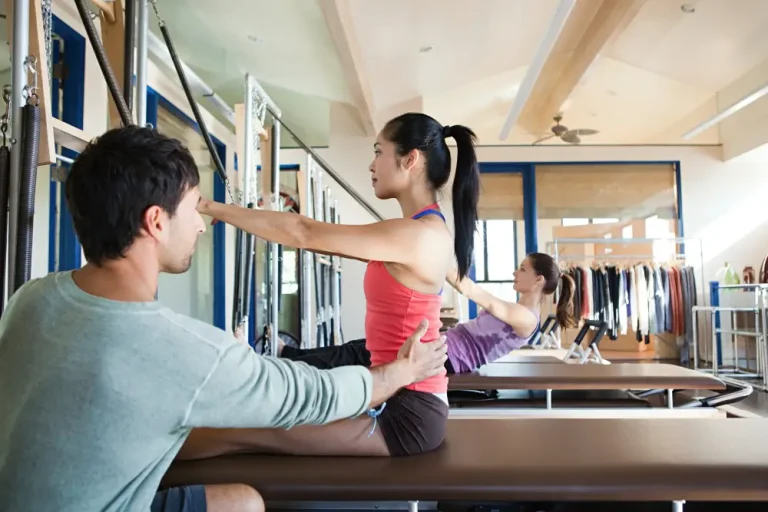
Book a session with a qualified instructor if you have recurring pain, recent injury, pregnancy, or if you’ve hit a plateau after 8 weeks. Instructors provide hands‑on cues, personalized progressions, and safe use of equipment.
Celebrating Milestones in Your Pilates Practice
Mark wins to stay motivated: chart improvements, share milestones with a friend, or reward yourself with a new class or small piece of equipment. Small celebrations reinforce long‑term adherence and make the process enjoyable.
Conclusion: Embracing Your Pilates Lifestyle
Starting your Pilates journey can be a genuine turning point for your health and daily movement. When you adopt a consistent Pilates schedule, you build better alignment, mobility, and resilient muscle tone that support your life outside the studio.
A well‑designed schedule balances form work, targeted strength, and recovery — the same approach I use with private clients to sculpt long‑term results. If you haven’t yet, check the “Pilates Schedule For Beginners” starter plan above and use the template to map your first month.
Ready to begin? Download your FREE beginner‑friendly Pilates Schedule template (4‑week plan with mat and reformer options) or book a 20‑minute consult to get a personalized pathway. — Jess, Certified Pilates Instructor, 14+ years teaching experience.