Pilates Body vs Gym Body (What No One Tells You)
Alright, let’s just get straight into it—this whole “Pilates body vs gym body” thing gets way more attention than it should, but I get why people ask. I used to be one of them.
When I first started working out, I thought lifting heavy weights was the only way to get “fit.” I had that gym membership, the protein powder, the overly complicated split routines. But after blowing out my knee (twice), and constantly feeling stiff and inflamed, I realized that chasing that sculpted “gym body” wasn’t actually getting me closer to what I really wanted: strength without pain, mobility, better posture, and to not feel like a truck hit me the next day.
That’s when I found Pilates. And let me tell you, it wrecked me—in the best way possible.
Related Read: Pilates For Weight Loss At Home The Ultimate Guide
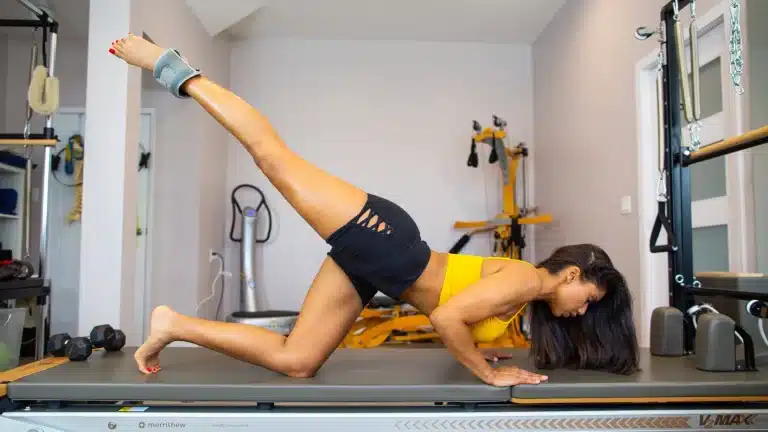
What Is a Pilates Body?
Let’s break this down. A “Pilates body” isn’t a specific shape—it’s a feeling. It’s core strength that comes from the deep, hard-to-reach muscles that stabilize your spine.
It’s having long, lean-looking muscles (thanks to eccentric loading and full range of motion).It’s gliding through the day with better posture and less pain.
You might not look jacked in the way gym bodies sometimes do, but let me tell you, I’ve trained women who can plank for 3 minutes straight and outlast most gym bros in a core workout.
One of my private clients, Sarah, came to me after two years of CrossFit. Her traps were tight, she had hip pain constantly, and she couldn’t touch her toes. After six weeks of Pilates, not only was she finally pain-free, but her waist looked tighter without losing weight—and her physical therapist even commented on her improved spinal mobility. That’s a Pilates win.
The Gym Body: Big Gains, But At What Cost?
Okay, let’s talk gym body.
I have nothing against lifting weights—in fact, I incorporate dumbbells into a lot of my Pilates workouts. But traditional gym workouts often focus on hypertrophy (muscle growth) with isolated movements: think bicep curls, leg press, cable machines. It builds mass, and it can look super impressive.
The downside? A lot of people (especially women) who go hard in the gym but skip mobility work end up tight, misaligned, and injured. I’ve seen it over and over. Rounded shoulders. Tight hip flexors. Knee pain. No ability to activate their deep core muscles because they’re only training the outer layer (rectus abdominis).
That same client Sarah? Her gym coach never once corrected her breathing or talked about her pelvic floor. She was leaking during double unders and just assumed it was normal.
It’s not.
Pros and Cons: Pilates Body vs Gym Body
Here’s a quick breakdown if you’re a visual learner like me:
Pilates Body:
- Pros
- Deep core strength (translates to real life)
- Increased flexibility + joint mobility
- Long, lean muscles (without bulk)
- Improved posture + alignment
- Injury prevention + rehab-friendly
- Cons
- Slower physical changes (not instant gratification)
- May lack cardio or heavy resistance unless programmed intentionally
Gym Body:
- Pros
- Builds muscle mass + visible strength quickly
- Easier to track progressive overload
- Boosts metabolism (muscle burns more calories at rest)
- Cons
- Can lead to tightness + imbalances
- Easy to overtrain or neglect core + flexibility
- Higher risk of injury without form focus
Real Talk: What Do You Want?
This is where I always get a little fired up. Because fitness is not just about how you look—it’s about how you feel in your body, every damn day.
Do you want to feel strong, supported, pain-free, and flexible? Pilates might be your new best friend.
Do you love pushing limits and seeing your biceps grow week to week? The gym could be your jam.
But honestly? The best results I’ve seen—on myself and my clients—come from a blend. I now do 3 days of Pilates and 1–2 days of resistance training with weights. It’s the perfect combo of strength, tone, and mobility. Plus, my body recovers better and I actually stay consistent.
Final Thoughts
I used to think the gym was the only path to fitness, and that Pilates was “just stretching.” Wow, was I wrong.
Now? I teach clients around the world how to build strong, resilient bodies that move better, not just look good. And that “Pilates body”? It’s not a trend. It’s a sustainable, injury-proof, feel-good way to live.
But here’s the secret sauce: combining Pilates and strength training is the best of both worlds.
When you layer strength training on top of a solid Pilates foundation—think deep core activation, joint stability, breath control—you lift safer, recover faster, and move more efficiently. And when you’re lifting weights regularly while keeping up with Pilates, your posture improves, your body leans out, and you actually see faster results.
That combo is what helped me transform my body after injuries and burnout. I see it in my clients too—the ones who blend both have fewer flare-ups, more confidence, and that “how-do-you-stand-so-tall” energy.
So whether you’re rocking deadlifts or the Hundred, just ask yourself: “Is my body working for me or against me?”
And hey—if you’ve never tried a Pilates workout and think it’s easy, come do one of mine. Let’s see if you’re still talking after teaser hold 😉