Is Pilates Resistance Training? (2025 Guide for Real Strength + Results)
If you’ve ever asked, “Is Pilates resistance training?” — you’re not alone. I’ve heard it from beginners, weightlifters, and even fellow trainers. And trust me, when I first began teaching Pilates over 13 years ago, I had the same question.
I thought resistance training meant heavy barbells and gym sweat. But Pilates? It changed everything for me — and my body.
In this guide, I’ll break it down in plain language, share my own experience, and help you decide if Pilates is enough for your goals. Plus, I’ll sprinkle in tips on nutrition, posture, and how to use Pilates for weight loss and long-term strength.
That’s why I created this comprehensive Pilates guide. We’ll discuss every tiny detail to answer the million-dollar question: Is Pilates resistance training?


What Counts as Resistance Training?
Resistance training means challenging your muscles using resistance — it could be weights, bands, springs, or even just your own body weight. And that’s where Pilates comes in.
From your first Pilates workout, you’re engaging muscles under controlled tension. Whether you’re using the reformer springs or doing bodyweight moves on the mat, you’re creating resistance.
And it’s sneaky-effective. Those slow, mindful movements? They hit your deep core, glutes, and all those tiny stabilizing muscles. That’s why it works so well — and why it leaves you sore in places you didn’t even know could get sore.

What Makes Pilates Work Like Strength Training?
Pilates is built on six key principles: breath, concentration, centering, control, precision, and flow. And every one of them plays a role in how we build strength.
Breath activates the pelvic floor and deep abs. Control and precision help prevent injury and make sure the right muscles are firing. And the flow? That’s what keeps it smooth and graceful — but don’t mistake graceful for easy.
Even mat Pilates is tough when done right. Try The Hundred with your legs in tabletop and tell me your core isn’t lit up like a bonfire.
Pilates Equipment = Built-In Resistance
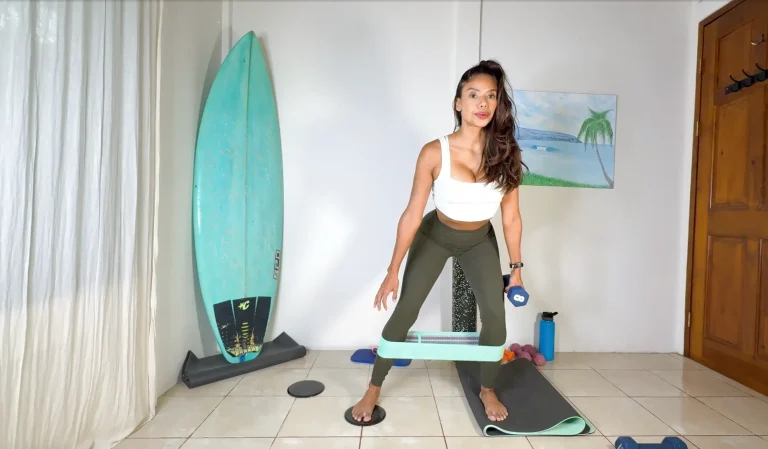
Let’s talk equipment: the reformer, magic circle, and resistance bands all add intensity in different ways.
- Reformer springs let you increase or decrease resistance based on your level.
- Resistance bands add continuous tension (don’t underestimate them!).
- Bodyweight? Also resistance. Ever tried side planks on the mat? Woof.
I once had a client who lifted heavy weights but scoffed at the Pilates ring. By the end of our session, her inner thighs were shaking. That’s the power of Pilates.
Does Pilates Help With Weight Loss?
Short answer: yes — especially when paired with a high protein breakfast, a no sugar diet, and calorie deficit meals.
I’ve had clients drop weight and inches by combining regular reformer or mat classes with simple diet shifts. Think sugar free snacks, low sugar recipes, and no flour — nothing extreme, just real food that supports muscle recovery and energy.
If you’re consistent with your workouts and fuel your body right, you’ll see results. Pilates helped me fix my knee pain, lose 10 lbs of fat, and gain lean muscle — no crash diets required.
Related Read: 10 High Protein Breakfast Ideas
Can You Build Muscle with Pilates?
Pilates helps you build lean muscle, especially if you’re new to strength training or rehabbing an injury. It’s ideal for:
- Women postpartum who need pelvic floor exercises
- People easing into fitness with joint concerns
- Anyone wanting to tone and strengthen without bulking
That said, if your goal is to gain significant muscle mass, eventually you’ll want to add weights too. But the foundation? Pilates is the best I’ve found.
Cardio + Pilates = Fat-Burning Combo
Pilates isn’t just strength — it can get your heart rate up too. Ever tried jumpboard Pilates on the reformer? It’s a cardio-meets-core burner that feels gentle on your joints but leaves you drenched.
Want to burn fat? Try:
- 3x/week Pilates + walk daily
- Focus on breath + activation
- Stick to a healthy meal plan with high protein, low sugar meals
That’s the secret sauce.
Different Types of Pilates Workouts
Pilates has evolved significantly since its creation, offering practitioners various approaches to suit their fitness goals and preferences. While all forms maintain the core principles of control, precision, and mindful movement, each style brings its own unique focus and methodology to the practice.
Classical Pilates
Also called traditional Pilates, was devised by Joseph Pilates and adheres to a distinct sequence of exercises. Every movement is executed with precision and control, representing the most authentic rendition of Pilates.
Contemporary Pilates
Also known as Modern Pilates, is inspired by the Joseph Pilates method. In this approach, Pilates Teachers incorporate functional exercises like lunges, squats, and hip thrusts to enhance the workouts’ user-friendliness.
Ready to Get Stronger Without Burning Out?
Join my 12-week Pilates & Strength Program — a hybrid plan that fuses deep core training, reformer-style workouts, and smart strength moves. Plus, I’ll teach you how to meal prep low sugar recipes, create a no sugar no flour diet that doesn’t suck, and build sustainable wellness habits.
And while you’re here — check out these helpful blogs:
Your strongest body is waiting. And you don’t need a gym membership to build it.
Pilates Resistance FAQs
Q: Does Pilates count as resistance training?
Yes, Pilates can be considered a form of resistance training. It uses body weight, bands, or light weights to challenge muscles, promoting strength, flexibility, and endurance without the high impact of traditional weightlifting.
Q: Is Pilates alone enough exercise?
Pilates offers a fantastic foundation for strength, flexibility, and core stability, but combining it with cardio or weight training can create a more balanced fitness routine for overall health
Q: Does Pilates actually build muscle?
Absolutely! Pilates is designed to build lean muscle by targeting smaller stabilizing muscles, helping to create a toned, sculpted physique while improving overall muscular endurance.
Q: Can I do Pilates instead of weights?
Yes, Pilates can be a great alternative to weights, especially if you’re looking to build strength, flexibility, and balance without heavy lifting. While it may not create the same muscle bulk as traditional weight training, Pilates effectively strengthens muscles, especially the core, and enhances stability.
Q: Is Pilates actually effective?
Absolutely! Pilates is highly effective for improving core strength, flexibility, and posture. It’s also known for enhancing body awareness, reducing injury risk, and creating lean muscle definition, making it a powerful addition to any fitness routine.