How to Strengthen Deep Core and Pelvic Floor With Breathing and Exercise
If you’ve ever struggled with lower back pain, a weak core, or pelvic floor dysfunction, you’re not alone. Many women experience these issues, especially after pregnancy or years of poor posture. The good news? Strengthening your deep core and pelvic floor muscles can make a huge difference in your daily life—helping you move better, feel stronger, and reduce discomfort.
In this blog, we’ll break down how your diaphragm, core, and pelvic floor work together and simple ways to start strengthening these muscles.
Quick Check: Is Your Core & Pelvic Floor Weak?
Here’s a simple self-check:
- Take a deep breath in. Does your chest rise more than your ribs expand?
- Stand tall and engage your core. Do you feel your lower belly pushing out?
- Try coughing. Do you feel pressure in your lower abs or pelvic floor?
If you answered yes to any of these, you might have weak core symptoms that can be improved with proper breathing and movement.
The Abdominal Canister: How Your Core, Pelvic Floor & Diaphragm Work Together
Think of your core like a pressure canister made up of four key parts:
- Diaphragm (top) – Helps with deep breathing and posture.
- Pelvic floor (bottom) – Supports your bladder, uterus, and bowel.
- Transverse abdominis (front & sides) – Acts like a natural corset.
- Multifidus (back) – Provides spinal stability.
These muscles must work together to keep your core strong and your body supported. If one part is weak or imbalanced, it can lead to issues like hip flexor tightness, lower belly pooch, or core instability.
The Secret to Core Strength: Breathing & Pressure Management
Many women unknowingly hold their breath or use shallow breathing, which disrupts core function. Learning to control pressure through diaphragmatic breathing is the first step toward core stability.
How to Practice 360-Degree Breathing
- Inhale: Breathe in through your nose, allowing your rib cage to expand outward (not just your belly!).
- Exhale: Slowly exhale through pursed lips, engaging your deep core by gently pulling your belly button in.
- Repeat for 8–10 breaths, focusing on full expansion and contraction.
This simple technique activates your transverse abdominis, improves posture, and reduces pelvic floor tension.
Strengthening Your Deep Core & Pelvic Floor
1. Core Activation with Breath
Exercise: Core Bracing
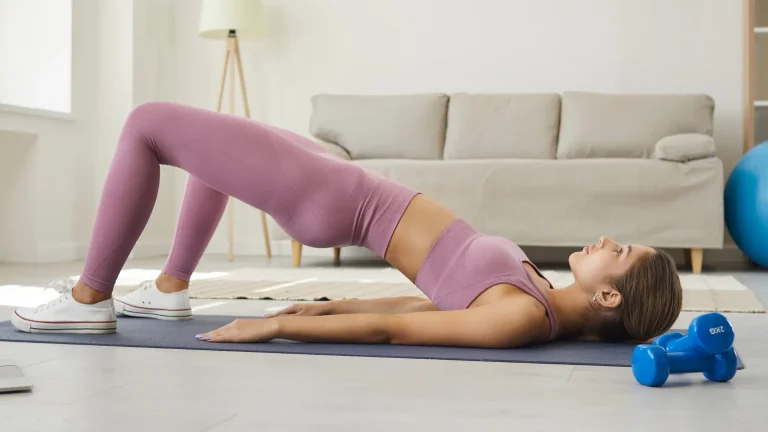
- Lie on your back with knees bent, feet flat.
- Inhale deeply, expanding your ribs.
- Exhale and gently pull your belly button in without sucking in.
- Hold for a few seconds, then relax. Repeat 10 times.
2. Pelvic Floor Relaxation & Strengthening
Many women either have a weak or overactive pelvic floor. If your pelvic floor is too tight, Kegels alone won’t help. Instead, balance contraction and relaxation.
Exercise: Pelvic Floor Coordination
- Inhale, allowing your pelvic floor to gently relax.
- Exhale, lightly lift your pelvic floor (imagine stopping the flow of urine).
- Relax fully between reps. Repeat 8–10 times.
3. Core & Spine Stability
Exercise: Dead Bug
- Lie on your back, arms and legs lifted.
- Inhale, keeping your core engaged.
- Exhale, lower one leg and the opposite arm.
- Bring them back up and switch sides. Repeat 8–10 times.
Why This Matters for Postpartum Recovery & Lower Back Pain
Whether you’re healing from pregnancy, dealing with back pain, or just want better posture, strengthening your deep core and pelvic floor is a game-changer. These exercises can help with:
- Postpartum recovery and diastasis recti healing
- Reducing lower back pain by improving stability
- Flattening the lower belly pooch through proper engagement
- Preventing pelvic floor dysfunction like leaking or prolapse
Take Control of Your Core Strength
By improving breathing, core activation, and pelvic floor function, you can build a stronger, more stable body—without spending hours in the gym.
Your core strength affects everything—from how you move to how you feel. Start small, be consistent, and give your body the support it deserves!