8 Deep Core Pelvic Floor Workout for Strength and Stability
Want to improve your deep core and pelvic floor strength? This deep core pelvic floor workout will guide you through 8 effective exercises to enhance stability and function. Read on to discover how to support your body with the right moves.


Key Takeaways
- Strengthening your deep core and pelvic floor enhances stability, supports vital organs, and improves overall fitness.
- Regular pelvic floor exercises boost bladder and bowel control, sexual health, and assist in recovery post-childbirth.
- Consistency and proper form in your workout routine are crucial for maximizing benefits and achieving noticeable improvements.
Top 8 Deep Core Pelvic Floor Workout Moves
The pelvic floor and deep core muscles while enhancing overall body stability and function. From the Bird Dog to Roll Outs with a Stability Ball, each exercise plays a unique role in promoting pelvic health and core strength.
Incorporating these exercises into your routine can build a strong pelvic floor and stable core, reducing the risk of pelvic pain, pelvic floor issues, and improving overall fitness. We’ll explore these exercises in detail.
1. TVA Activation (Abdominal Bracing)

TVA activation, also known as abdominal bracing, is a technique used to engage the transverse abdominis muscle. Here’s how to do it:
- Starting Position: Lie on your back with your knees bent and feet flat on the floor.
- Deep Breathing: Take a deep breath in and out, feeling your diaphragm expand and contract.
- Engage the TVA: As you exhale, draw your belly button towards your spine, feeling your TVA muscle engage.
- Hold: Hold this engagement for 5-10 seconds and then release.
- Repetitions: Repeat this process for 10-15 repetitions.
This exercise helps in strengthening the deep abdominal muscles, contributing to better core stability and overall pelvic health.
2. Bird Dog
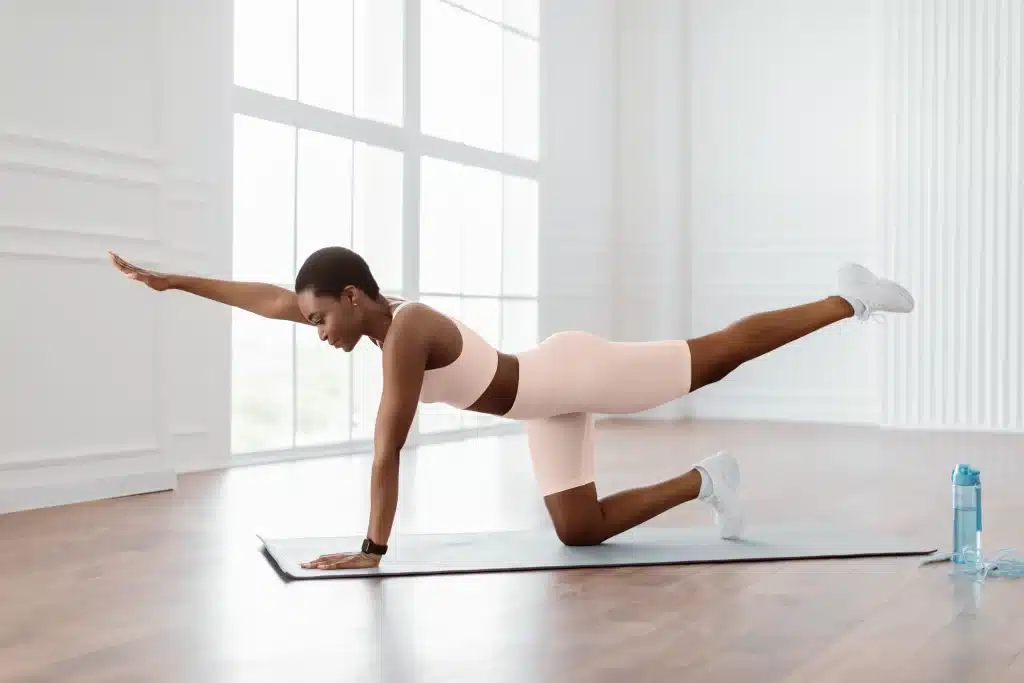
The Bird Dog exercise enhances core stability while avoiding back strain. Position yourself on all fours, ensuring your shoulders are aligned over your wrists and your hips are directly above your knees. Maintain stability in your core and avoid arching your back as you lift one arm and the opposite leg. Engage your glute muscles and ensure your back stays straight.
Perform 10 repetitions on each side, focusing on maintaining balance and control throughout the movement. This exercise not only strengthens the deep core muscles but also improves coordination and balance.
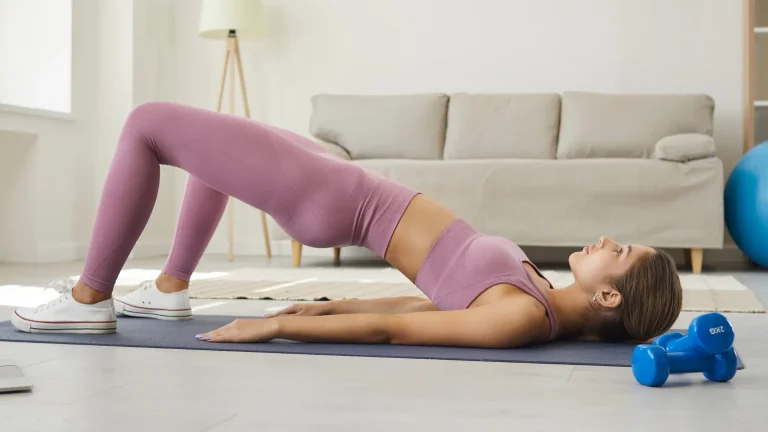
3. Glute Bridge March

The Glute Bridge March targets the deep core muscles and glutes, essential for overall body mechanics and alignment. Begin in a bridge position with your hips lifted and feet flat on the floor. Alternately lift and lower each leg while keeping your hips in a stable, raised position, forming a straight line from your knees to your shoulders.
Engage your core fully and practice the movement slowly to maintain control and proper muscle engagement. This exercise enhances stability and strengthens the glutes, contributing to better pelvic health.
4. Dead Bug

The Dead bug is an excellent exercise for promoting coordination between upper and lower body movements while keeping the core engaged. Start by lying on your back with your arms lifted and legs in a tabletop position. As you exhale, lower the opposite arm and leg while ensuring your lower back remains pressed into the floor.
Perform 5 repetitions on each side, focusing on maintaining stability and control throughout the movement. This exercise is highly effective for strengthening the deep core muscles and improving overall coordination.
5. Side Plank
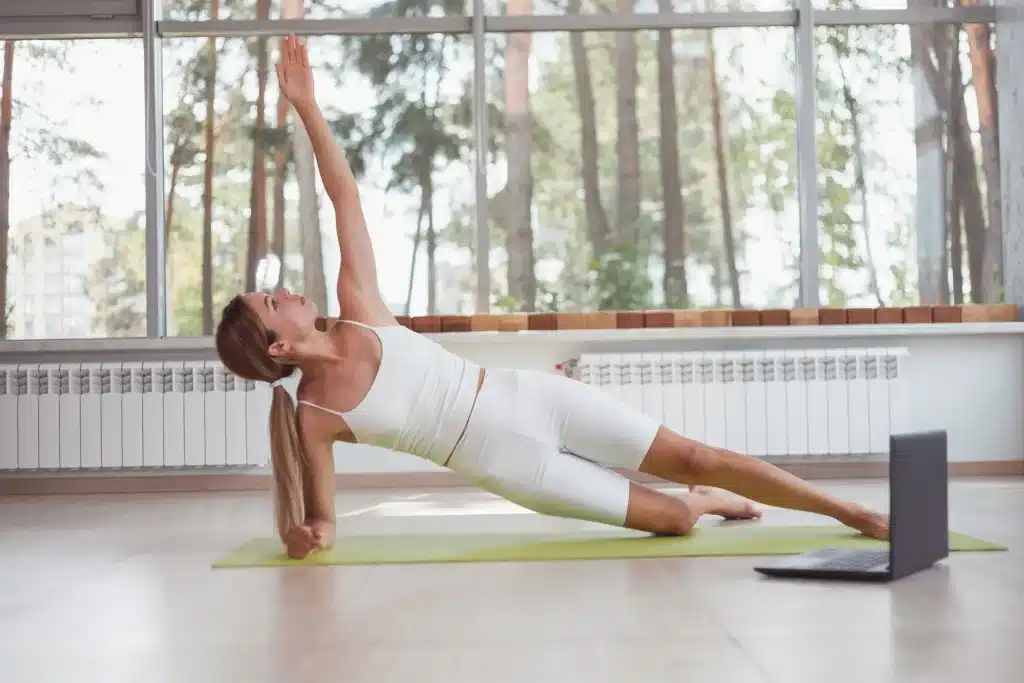
To perform the Side Plank, follow these steps:
- Lie on your side with your feet stacked or on your knees for beginners
- Prop yourself up on your forearm, ensuring your elbow is directly under your shoulder.
- Lift your hips off the ground, creating a straight line from your head to your feet.
- For beginners, modify by dropping the bottom knee for additional support while still lifting the hips.
Maintaining a straight line is crucial for effective core engagement and to avoid back strain. This exercise enhances core stability and strengthens the deep abdominal muscles, contributing to a strong core.
6. Elevated Forearm Plank

The Forearm Plank is a staple for engaging deep core muscles and enhancing stability. Position yourself with forearms on the ground and body in a straight line, avoiding sinking hips to prevent back strain. This exercise is excellent for maintaining core engagement and stability, crucial for overall core strength. Incorporate this exercise regularly to build a solid core foundation.
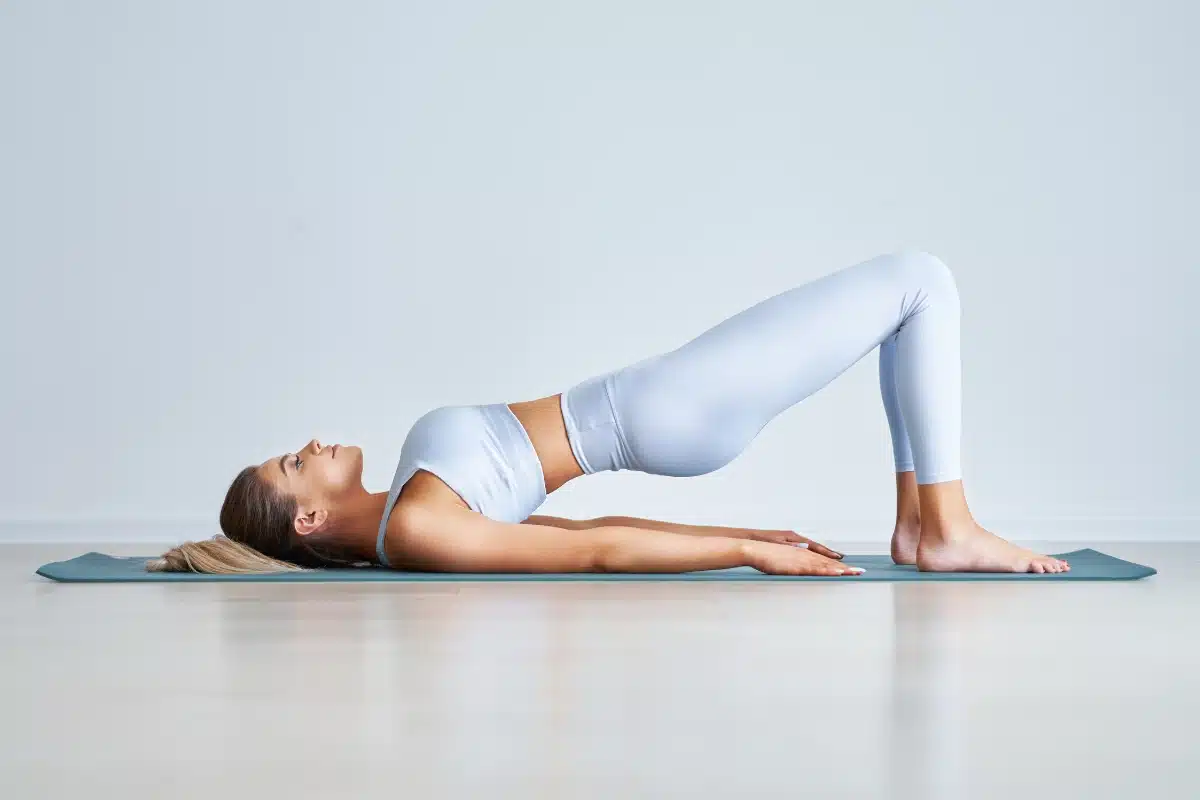
7. Glute Bridge With Inner Thigh Squeeze

Start in a starting position by laying on mat place a small Pilates ball, Pilates ring or yoga block on the inside your inner thighs. Lift the hips and slowly press into or out to the Pilates ring. Hold for 2-3 seconds and slowly release and articulate your spine down.
This exercise emphasizes core stability, enhancing the effectiveness of your workout. Incorporate this move to improve overall core strength and stability.
8. Pall-off Press

The Pall-off Press is an exceptional exercise designed to strengthen the core by focusing on resisting rotation. This exercise can be performed in various positions, including standing, kneeling, and split stance, making it versatile and effective.
Using a resistance band or cable machine, maintain a stable stance, control the movement, and resist twisting while extending your arms. To increase the challenge, narrow your stance or add isometric holds during repetitions. This exercise is vital for enhancing core stability and pelvic floor support.
Understanding Deep Core Muscles and Pelvic Floor Function

At the heart of your body’s stability lies an intricate network of deep core muscles. These include:
- The transverse abdominis
- Diaphragm
- Multifidus
- Pelvic floor muscles (including the pubococcygeus and iliococcygeus)
All of these muscles work together to stabilize the spine, support internal organs, and enhance posture. Unlike the superficial muscles such as the rectus abdominis, these deep muscles are crucial for maintaining balance and functional movement.
The pelvic floor muscles, in particular, play a pivotal role. They provide a supportive base for essential structures including the bladder, urethra, rectum, and uterus, ensuring that these organs function properly. The pelvic floor works in tandem with deep abdominal and back muscles to maintain overall pelvic health and spinal support.
Recognizing these functions helps appreciate the exercises targeting these critical areas.
What are the Deep Core Muscles?
The deep core muscles are a group of essential muscles located deep within the abdominal cavity, playing a crucial role in maintaining core stability, posture, and overall physical function. These muscles include the transverse abdominis, multifidus, pelvic floor muscles, and diaphragm.
The transverse abdominis is the deepest layer of abdominal muscles, extending from the lower ribs to the top of the pelvis. It is responsible for compressing the abdominal contents and stabilizing the spine. The multifidus is a small, narrow muscle attached to the spine, crucial for spinal stability.
The pelvic floor muscles, including the pubococcygeus and iliococcygeus, support the pelvic organs and maintain continence. Lastly, the diaphragm, the primary muscle used for breathing, also plays a significant role in core stability.
Understanding the function of these deep core muscles helps in appreciating the importance of exercises targeting these areas, ensuring a strong and stable core.
Why a Strong Pelvic Floor Matters
A strong pelvic floor is essential for regulating the release of urine and feces, improving bladder and bowel control. These muscles also significantly impact sexual health and function. Regular pelvic floor exercises can enhance sexual health and orgasms for both genders, and for men, these exercises can alleviate prostate pain and improve conditions related to incontinence.
Moreover, a strong pelvic floor can prevent pelvic organ prolapse, a condition where pelvic organs sag into the vagina. This is particularly beneficial for women post-childbirth, as training these muscles can enhance recovery.
With consistent practice, noticeable improvements in symptoms can be seen within six to eight weeks. Clearly, pelvic floor strengthening is not just about muscle training; it’s about improving quality of life and ensuring the proper function of vital bodily systems.
Benefits of Strengthening the Pelvic Floor Muscles
Strengthening the pelvic floor muscles offers numerous benefits for overall health and well-being. Here are some key advantages:
- Improved Bladder Control: Strengthening these muscles can significantly reduce the risk of urinary incontinence, enhancing bladder control.
- Enhanced Sexual Function: Regular pelvic floor exercises can improve sexual function and pleasure for both men and women.
- Support for Pelvic Organs: A strong pelvic floor supports the pelvic organs, reducing the risk of pelvic organ prolapse.
- Improved Core Stability: Strengthening the pelvic floor contributes to better core stability and posture.
- Reduced lower back pain: A strong pelvic floor can help alleviate lower back pain and reduce the risk of injury.
- Enhanced Physical Function: Overall physical function and athletic performance can improve with a strong pelvic floor.
Incorporating pelvic floor exercises into your routine can lead to these significant health benefits, promoting better pelvic health and overall well-being.
Essential Tips for Effective Deep Core and Pelvic Floor Exercises
When it comes to pelvic floor and deep core exercises, consistency and correct form are paramount. Effectively targeting the transversus abdominis requires specific activation techniques. Keep your back on the mat during leg raises to avoid arching and ensure your core remains engaged throughout the movement. Additionally, maintain a neutral spine position to further enhance your form and effectiveness.
Integrate these exercises into the end of your workout, aiming for three times a week. A solid routine consists of 10 to 12 reps per exercise, with two total rounds and up to one minute of rest between rounds.
Following these tips can maximize the benefits of your deep core workout and strengthen your pelvic floor with pelvic floor exercise.
Preparing for Deep Core Exercises
Before diving into a deep core exercise program, it’s essential to prepare both your body and mind. Here are some tips to help you get started:
- Consult a Professional: Speak with a physical therapist or healthcare professional to determine the best exercises for your individual needs and goals.
- Start Gradually: Begin with gentle exercises and gradually progress to more challenging ones to avoid injury.
- Engage Your Core: Draw your belly button towards your spine and maintain a neutral spine position to engage your core muscles effectively.
- Practice Deep Breathing: Deep breathing exercises can help activate your diaphragm and promote core stability.
- Warm Up: Always warm up with light cardio and stretching before exercising to prepare your muscles and prevent injury.
By following these preparation tips, you can ensure a safe and effective deep core workout routine.

Incorporating Deep Core and Pelvic Floor Exercises into Your Routine
For best results, aim to practice pelvic floor exercises daily. Set specific times each day to perform these exercises, such as while brushing your teeth, to enhance adherence. Incorporate exercises targeting the transverse abdominis to improve core stability and decrease back pain.
Gradually increase the intensity of your exercises based on your strength, and ensure you allow recovery time between sessions. Training these muscles in various positions, including upright, is essential for overall effectiveness. Consistency and patience are key, as visible improvements take time.
Related articles 5 Fat Burning Exercises to Slim Your Hips.
Common Mistakes to Avoid
Avoid the common mistake of pushing down on the pelvic floor during exercises, which can lead to strain. Overly contracting the outer abdominal muscles can also hinder effectiveness. Ensure you activate all three pelvic openings during exercises and relax the muscles after contraction to prevent spasms and fatigue.
Maintaining proper posture is crucial to avoid increasing pressure on the pelvic region. Focus on the pelvic area, not the glute muscles, and ensure each exercise involves a strong voluntary effort for effective strengthening.
Perform exercises with focused attention to achieve the best results.
Working with a Pelvic Floor Physical Therapist

Consulting a pelvic floor physical therapist can provide personalized guidance for your exercises, ensuring you perform them correctly and effectively. If you experience persistent pain during deep core exercises, it’s essential to seek professional advice. Difficulty in isolating your transverse abdominis is another indicator to consult a physical therapist.
Physical therapists can assist with hypertonic exercises to lengthen and relax short or tight pelvic floor muscles, enhancing overall pelvic health. Working with a professional ensures you address any pelvic floor issues effectively and safely.
Summary
In summary, strengthening your deep core and pelvic floor muscles is crucial for overall health, stability, and function. From understanding the anatomy and importance of these muscles to learning effective exercises and tips for incorporating them into your routine, this guide provides a comprehensive path to achieving a strong core and pelvic floor.
By avoiding common mistakes and considering professional guidance when necessary, you can maximize the benefits of your workouts. Embrace these practices to enhance your fitness journey and improve your quality of life. Start today and build a stronger, more stable foundation for your body.
Frequently Asked Questions
Q: How often should I perform deep core and pelvic floor exercises?
To achieve the best results, aim to perform deep core and pelvic floor exercises about three times a week, ideally at the end of your workout. Stay consistent and feel the difference!
Q: What are the benefits of a strong pelvic floor?
A strong pelvic floor leads to better bladder and bowel control, enhanced sexual health, and aids in recovery after childbirth or surgeries. Prioritizing your pelvic health is a powerful investment in your overall well-being!
Q: Can I do pelvic floor exercises during daily activities?
Absolutely! You can easily integrate pelvic floor exercises into daily activities like brushing your teeth, making it simple to stay consistent and boost your results. Keep it up!
Q: What should I do if I experience pain during these exercises?
If you experience pain during exercises, it’s crucial to consult a pelvic floor physical therapist for tailored help and support. Don’t hesitate to seek guidance; your health and comfort are the top priority!
Q: How long does it take to see improvements from pelvic floor exercises?
You can expect to see noticeable improvements from pelvic floor exercises in just six to eight weeks with consistent practice. Stay dedicated, and you’ll feel the benefits!